

La investigación encuentra que el materialismo puede influir en nosotros para elegir "compra ecológica" en lugar de no comprar nada.
Humans’ overconsumption of resources—from the Comida y ropa we buy to the methods of transportation we choose—is a leading contributor to global climate change, says Sabrina Helm, an associate professor in the Norton School of Family and Consumer Sciences in the College of Agriculture and Life Sciences at the University of Arizona.
Therefore, it’s increasingly important to understand the choices consumers make and how those decisions affect the health of a planet with limited resources.
In a new study, Helm and her collaborators explore how culturally entrenched materialistic values influence pro-environmental behaviors in millennials, who are now the nation’s most influential group of consumers.
You, your stuff, and the planet
The researchers focused on two main categories of pro-environmental behaviors: 1) reduced consumption, which includes actions like repairing instead of replacing older items, avoiding impulse purchases, and not buying unnecessary items; and 2) “green buying,” or purchasing products designed to limit environmental impacts, such as goods made from recycled materials.

The researchers also looked at how engaging in pro-environmental behaviors affects consumer well-being.
More materialistic participants, the researchers found, were unlikely to engage in reduced consumption. However, materialism did not seem to have an effect on their likelihood of practicing green buying. That’s probably because green buying, unlike reduced consumption, still offers a way for materialists to fulfill their desire to accumulate new items, Helm says.
“There is evidence that there are ‘green materialists,'” says Helm. “If you are able to buy environmentally friendly products, you can still live your materialist values. You’re acquiring new things, and that fits into our mainstream consumption pattern in our consumer culture, whereas reduced consumption is more novel and probably more important from a sustainability perspective.”
Study participants who reported having fewer materialistic values were much more likely to engage in reduced consumption. Consuming less was, in turn, linked to higher personal well-being and lower psychological distress.
Buy less for more satisfaction
Green buying—which may have some positive environmental implications, although to a lesser degree than reduced consumption—was not found to improve consumer well-being, Helm says.
“We thought it might satisfy people that they participated in being more environmentally conscious through green buying patterns, but it doesn’t seem to be that way,” Helm says. “Reduced consumption has effects on increased well-being and decreased psychological distress, but we don’t see that with green consumption.”
The take-home message for consumers: “The key is to reduce consumption and not just buy green stuff. Having less and buying less can actually make us more satisfied and happier,” Helm says.
“If you have a lot of stuff, you have a lot on your mind,” she says. “Maybe you have a lot of debt because you bought all that stuff, and now you have to manage all that stuff. It requires maintenance and being organized. It’s not like you buy it and you’re done with it. There’s a lot of burdens of ownership, and if you relieve yourself of that burden of ownership, most people report feeling a lot better and freer.”
Sostenibilidad financiera
The researchers also looked at how materialism affects millennial consumers’ proactive financial behaviors, such as budgeting and saving. Examining financial behaviors alongside pro-environmental behaviors provides a picture of how young adults proactively cope with resource limitations in two contexts: environmental and financial, Helm says.
“We’ve been told since childhood that there’s a product for everything and it’s OK to buy…”
As expected, Helm and her collaborators found that those who reported having more materialistic values engaged in fewer proactive financial behaviors than their less materialistic counterparts. The researchers also found that, consistent with previous studies, proactive financial behaviors were associated with better personal well-being, life satisfaction, and financial satisfaction, as well as lower psychological distress.
“For very obvious reasons, if you have a proactive financial strategy and put money to the side and live within your means, it has positive well-being effects,” Helm says.
The researchers’ findings are based on data from a longitudinal study that followed 968 young adults from their first year of college, when they were between the ages of 18 and 21, to two years post-college, when they were ages 23-26. The participants responded to online survey questions designed to measure materialism, proactive financial behaviors, pro-environmental behaviors, personal well-being, life satisfaction, financial satisfaction, and psychological distress.
Understanding how materialistic values affect consumer behaviors, and how those behaviors in turn affect personal and environmental well-being, is important, Helm says. However, she acknowledges that for many consumers, shifting behaviors to be more financially proactive and consume less will be challenging.
“We’ve been told since childhood that there’s a product for everything and it’s OK to buy, and it’s a good thing because that’s how the economy works,” she says. “We’re brought up this way, so changing behaviors is very difficult.”
La investigación aparece en la revista Jóvenes consumidores.
Fuente: Universidad de Arizona
Libros relacionados
Drawdown: El plan más completo que se haya propuesto para revertir el calentamiento global
por Paul Hawken y Tom Steyer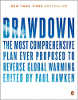 Ante el temor y la apatía generalizados, una coalición internacional de investigadores, profesionales y científicos se han unido para ofrecer un conjunto de soluciones realistas y audaces al cambio climático. Aquí se describen cien técnicas y prácticas, algunas son bien conocidas; algunos de los cuales nunca habrás escuchado. Van desde la energía limpia hasta la educación de las niñas en los países de bajos ingresos hasta las prácticas de uso de la tierra que eliminan el carbono del aire. Las soluciones existen, son económicamente viables y las comunidades de todo el mundo las están implementando con habilidad y determinación. Disponible en Amazon
Diseño de soluciones climáticas: una guía de políticas para la energía baja en carbono
por Hal Harvey, Robbie Orvis, Jeffrey Rissman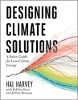 Con los efectos del cambio climático ya sobre nosotros, la necesidad de reducir las emisiones globales de gases de efecto invernadero es nada menos que urgente. Es un desafío abrumador, pero las tecnologías y estrategias para enfrentarlo existen en la actualidad. Un pequeño conjunto de políticas energéticas, bien diseñadas e implementadas, pueden encaminarnos hacia un futuro bajo en carbono. Los sistemas energéticos son grandes y complejos, por lo que la política energética debe ser centrada y rentable. Los enfoques de talla única para todos simplemente no harán el trabajo. Los formuladores de políticas necesitan un recurso claro y completo que describa las políticas energéticas que tendrán el mayor impacto en nuestro futuro climático y describa cómo diseñar bien estas políticas. Disponible en Amazon
Esto lo cambia todo: Capitalismo contra el clima
por Naomi Klein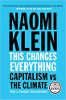 In Esto lo cambia todo Naomi Klein sostiene que el cambio climático no es solo otro tema que se debe presentar cuidadosamente entre los impuestos y la atención médica. Es una alarma que nos llama a arreglar un sistema económico que ya nos está fallando de muchas maneras. Klein construye meticulosamente el argumento de cómo la reducción masiva de nuestras emisiones de efecto invernadero es nuestra mejor oportunidad para reducir simultáneamente las desigualdades, volver a imaginar nuestras democracias rotas y reconstruir nuestras economías locales destripadas. Expone la desesperación ideológica de los negadores del cambio climático, los delirios mesiánicos de los aspirantes a geoingenieros y el derrotismo trágico de demasiadas iniciativas ecológicas. Y ella demuestra precisamente por qué el mercado no ha corregido la crisis climática, y no puede hacerlo, sino que empeorará las cosas, con métodos de extracción cada vez más extremos y ecológicamente perjudiciales, acompañados por un capitalismo de desastre rampante. Disponible en Amazon
Del editor:
Las compras en Amazon van a sufragar el costo de traerle InnerSelf.comelf.com, MightyNatural.com, y ClimateImpactNews.com sin costo alguno y sin anunciantes que rastreen sus hábitos de navegación. Incluso si hace clic en un enlace pero no compra estos productos seleccionados, cualquier otra cosa que compre en esa misma visita en Amazon nos paga una pequeña comisión. No hay ningún costo adicional para usted, así que por favor contribuya al esfuerzo. Tú también puedes usa este enlace para usar con Amazon en cualquier momento para que pueda ayudar a apoyar nuestros esfuerzos.